
Fewer interruptions: real-time venue intelligence, powered by T‑Mobile 5G
Computer-vision intelligence at event scale, all running reliably on the T‑Mobile network.
The problem: live events run blind on crowd flow
Walk into any major venue on game day and the same questions follow you everywhere. Is there an open seat up in that grandstand? Is the market backed up, or did they just run out of food? How many people are actually on site right now? For decades the answers have been a guess. Operators watch, radio each other, and react only after the bottleneck forms. Fans pay for it by missing the action and waiting in line; venues pay in lost concessions and frustrated guests. The intelligence has been there in plain sight, just not connected.
The solution: on-device computer vision over T‑Mobile 5G
Queues puts that intelligence to work. Their on-device, privacy-preserving sensors read occupancy, people counts, and dwell time right where they're mounted — no facial recognition, no personal data, and no video leaving the sensor. The hard part was never the sensors; it was keeping every one of them connected and in sync across a live venue without a single dropout. On T‑Mobile 5G at sports venues around the country, that's exactly how it works — whether it's across grandstand seating, concessions, team stores, or entries and exits, it's stable enough to trust on the biggest events of the year.
And what operators get back is specific. Seating occupancy refreshes on a set interval and goes two directions at once: to event operations, and to fans through the venue's own app, so finding an open seat stops meaning walking the venue to look for one. In concessions and retail, people counts and average dwell time tell staff whether a line is building because a location has run low on product, early enough to do something about it. At entries and exits, sensor counts reconciled against ticket scans give a live read on how many ticketed guests are actually on site. Different questions, one network answering all of them.
And here is what changes the economics. The conventional approach is cloud-processed, every sensor live-streaming its video out to be analyzed somewhere else. That is bandwidth-intensive by design, and it competes for the same network capacity fans and operators are counting on, which is why those deployments so often need a network architecture of their own and why the unit economics are hard to close. Because the AI runs on the sensor instead, there is no video network to build at all. Power still has to reach each sensor over Ethernet, that cabling does not disappear. But the networking layer, the part that turns a deployment into a construction project, comes from T‑Mobile 5G. Deployment becomes a setup task, one that can move with the event from venue to venue without rebuilding the infrastructure each time.
“Every venue we walk into asks the same thing: how fast can you be live? On T-Mobile 5G the answer is days, not months. The network stopped being the hard part, so we get to focus on what the sensors actually tell operators.” — Sam Porta, CEO, Queues
The impact: best-in-class connectivity, supported by the T‑Mobile Accelerator
This is exactly where the T‑Mobile Accelerator supports its partners. Keeping every sensor online and in sync across a live venue is a connectivity engineering problem, and the Accelerator worked alongside Queues and T‑Mobile's technology teams to scope the coverage and density each deployment requires, then stand it up on the network. The result is best-in-class connectivity where it matters most: nearly 100% uptime with fewer interruptions through peak crowds, feeding a live dashboard that gives operators a real-time read on their venue. No dropouts, no blind spots.
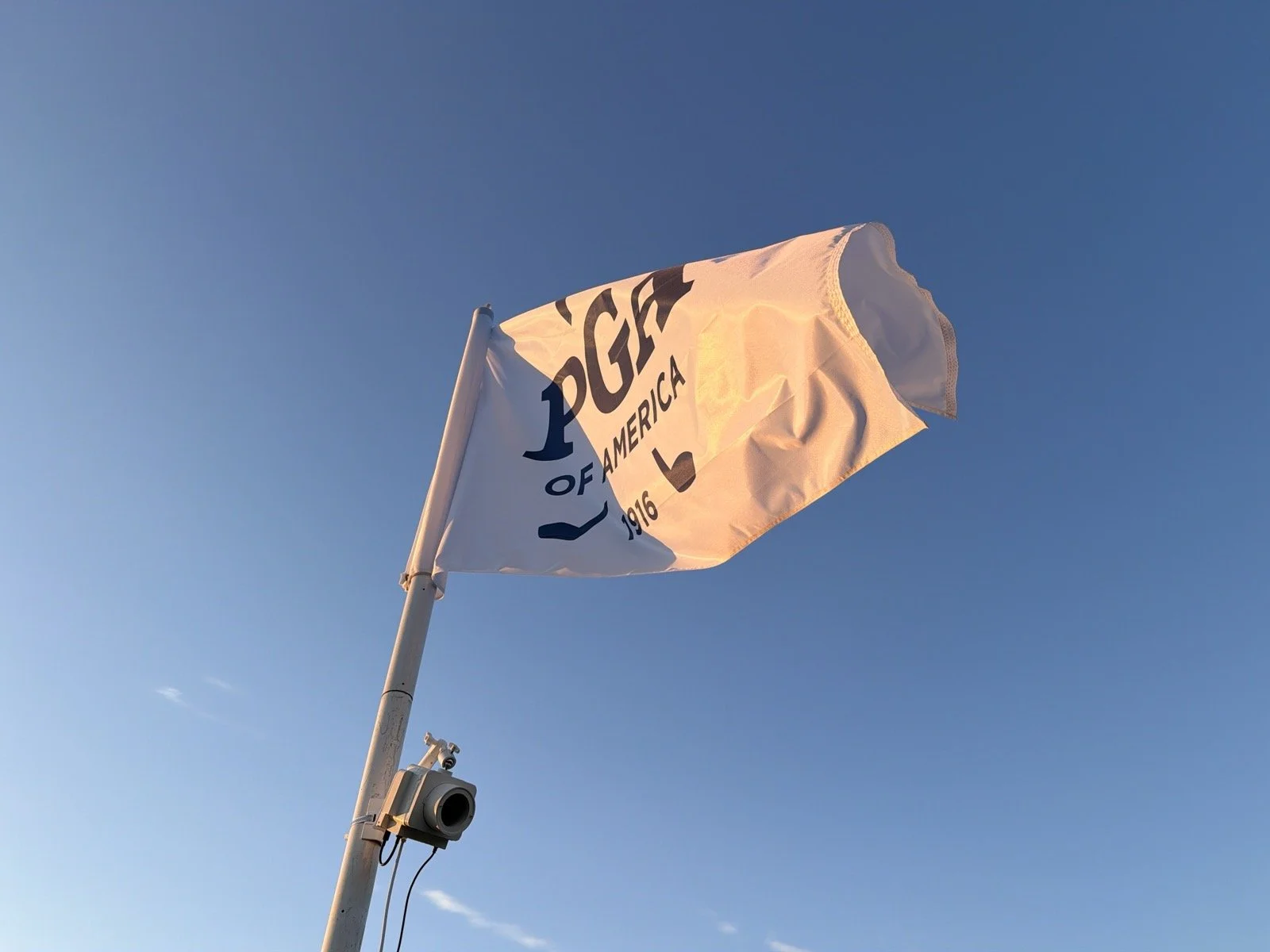
“The T-Mobile Accelerators role within T‑Mobile isn’t to lay-up, it’s to take aggressive swings. The PGA Championship is one of the most challenging tests connectivity can face — more than 150,000 fans, a sprawling outdoor course, dozens of sensors that can’t miss a beat. Watching Queues run clean through it on T‑Mobile network is exactly why founders come to the T‑Mobile Accelerator: we bring the engineers, the network, and the real-world stage to prove your product when the stakes are highest — and to scale it for what’s next.” — Bradley Chapman, T‑Mobile Accelerator
For venues, the takeaway is simple: neither the network nor the buildout is the limiting factor anymore. When deploying advanced technology no longer means engineering a video network first, reliable 5G turns computer vision from a pilot-day novelty into an operations tool you can stand up at any event in days, and scale across a portfolio of venues.